Insensitivity to chemotherapy remains a major problem in cancer treatment. Some tumor cells can adapt, making the drug less effective. In the case of ovarian cancer, almost half of patients do not respond adequately to the chemotherapy they are offered. And yet these women still have to deal with the side effects, while the tumor continues to grow.
Replication bubble
One solution to this problem lies in tailoring cancer therapy to the individual patient. If practitioners can select in advance which patients will respond to the therapy, they can ensure that only those patients are treated. This saves the rest of the patients from undergoing pointless treatment that only causes side effects.
But how do we know which patients will respond to chemotherapy and which will not? This can be determined by looking at how DNA replicates during cell division. Usually, DNA is neatly coiled up in the cell nucleus. When a cell divides, the DNA also needs to be duplicated. To copy it, it must be uncoiled piece by piece. Such an uncoiled piece of DNA is called a ‘replication bubble’.
‘A cell commits to a developmental pathway early in life’
Researchers at Erasmus MC and Oncode Institute have discovered that cancer cells respond differently to cancer therapy depending on the replication bubble. They can view and analyze these bubbles using a technique they developed themselves. ‘The fate of a cell is determined very early in the development phase,’ says Nitika Taneja, principal investigator at Erasmus MC. ‘A cell commits to a development pathway early on. If we can recognize that commitment, we can make much better treatment choices.’
DNA research
How does DNA behave in dividing cancer cells? That is the main question of Nitika Taneja’s research. She and her colleagues are examining what happens to DNA in a cell when its replication does not proceed smoothly.
Normally, DNA is neatly duplicated during cell division, but sometimes that process is disrupted. This can lead to errors, which play a major role in cancer. Taneja and her colleagues are primarily looking at the DNA and the proteins surrounding it, and how they rearrange themselves in the cell when such a problem occurs. The researchers use in-house-developed techniques in their laboratory for this purpose. The aim is to find out why some cells go haywire. This will enable us to treat cancer more effectively in the future.
Want to know more about this topic? Amazing Erasmus MC will soon be interviewing Nitika Taneja in more detail about her research. That interview will also appear in the Public Annual Report.
PRECISE project
Taneja and her colleagues have now set up a project to further develop their knowledge of the replication bubble into a new diagnostic test. To this end, they received an ERC Proof of Concept grant, a prestigious European funding program that supports researchers in bringing fundamental research to the clinic. With this grant, the researchers can start collecting patient material. This will enable them to validate and develop the test so that it can actually determine which ovarian cancer patients will benefit from chemotherapy.
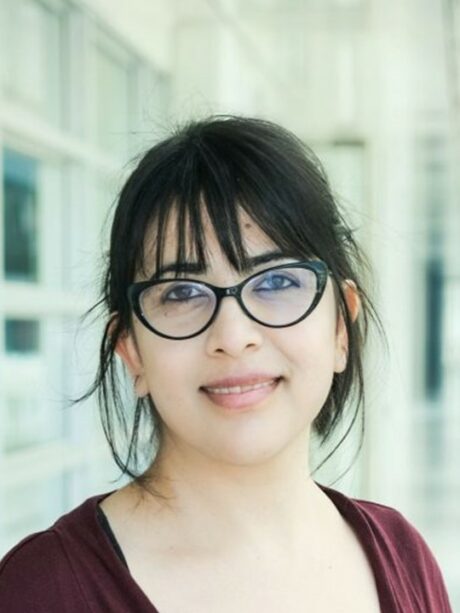
Nitika Taneja
Biomedical research
Through biomedical research, we work to understand basic biological and medical principles. This research is at the heart of medical progress and lays the foundation for innovations that improve care. As stated in Strategy28, Erasmus MC’s strategic plan.