

ERGO is a prospective study, in which participants are followed over a long period. Since its launch in 1990, nearly 20,000 people aged 40 and over have already participated in the Erasmus Rotterdam Health Study (ERGO). The oldest participants, about 300 of the 7,000 active participants, are now over 90 years old. Once every four years, residents of the Rotterdam district of Ommoord are invited to the research center. There they fill out questionnaires, have their blood drawn, and undergo a general health check.
ERGO is the longest-running population study in the Netherlands, with findings that are globally leading. It has now been ten years since Arfan Ikram, research leader and professor of Epidemiology, took over from the founder, Professor Albert Hofman. ‘The research was and still is pioneering in many ways,’ Ikram says enthusiastically.
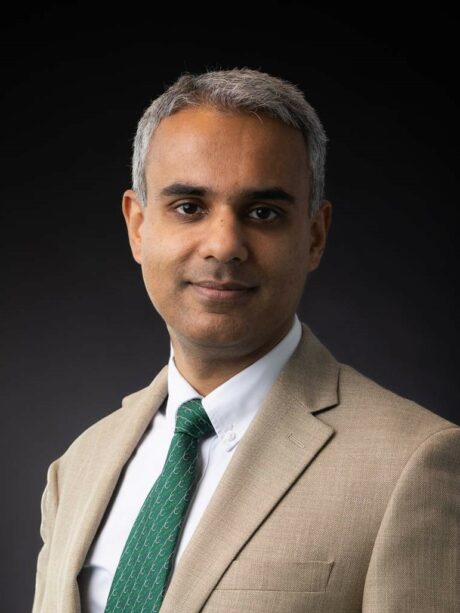
‘Prevention is trendy now, but many years ago it was a revolutionary idea,’ Ikram continues. Disease in old age is not a given. Aging is a process. But that is different from becoming ill.’ According to him, the fact that some people can live to a hundred years old without disease is proof of this. ‘There are, therefore, other causes besides age alone that determine why one person becomes ill and another does not. That way of thinking started the search for possible factors. It has led to many scientific insights and prevention.’
These insights have an impact on policy changes in the Netherlands and beyond, says Ikram. ‘It has triggered a shift in thinking.’ He mentions several examples: the prevention agreement, the national dementia strategy, and the focus on women’s health. Internationally, ‘The Rotterdam Study’ is also regularly mentioned in reports by the World Health Organization and other NGOs. ‘If we look at the first scientific studies on, for example, the prevention of diseases, ERGO played a role in that.’
Heart Attacks and Dementia
Closer to healthcare, there are also examples of ERGO’s impact. In the 1990s, Ikram worked on a scientific publication about unrecognized heart attacks. At that time, doctors did not treat people who had not noticed they had a heart attack, even if it was visible on an electrocardiogram. This was considered harmless, as it was not severe enough to cause symptoms. ERGO showed that the prognosis for these people was worse than for those whose infarction was recognized and treated. ‘The idea that an unrecognized heart attack would be harmless turned out to be untrue,’ Ikram says. ‘After that, the guideline was changed. From that moment on, an unrecognized heart attack had to be treated in the same way.’
In his ‘own’ field of research, Ikram came to the realization that dementia is much more often linked to the condition of the blood vessels than was previously thought. Vascular damage accumulates over years before the disease manifests. But he also saw that genetic causes and lifestyle play a role. Later, it became clear that the risk of dementia can be significantly reduced through a healthy lifestyle. The latest findings show that the relative risk of dementia is decreasing. The researchers suspect that this can be attributed to prevention. Dementia, therefore, is also not an unavoidable consequence of aging, says Ikram. ‘We hope that further research in the future will lead to measures to prevent dementia.’
Future
Thirty-five years of ERGO has yielded a lot. How does Ikram view the future, now that more and more data are becoming available? ‘It now comes down to the fact that we can detect causes more and more precisely. Think of subtle genetic effects and biomarkers in the blood.’ He also sees potential in mapping risk factors at the group level through exposure to environmental factors, such as air and noise pollution, but also microplastics. ‘That is a new challenge, which requires perseverance. Because with such risk factors, we not only have to convince healthcare providers and patients, but also policymakers,’ Ikram concludes.
About ERGO
At ERGO, more than 50 researchers from 15 different departments of Erasmus MC are involved. They study health problems that are common in older age. Think, for example, of cardiovascular diseases, fatty liver, and dementia. The results are published in scientific journals. In this way, we learn more and more about the onset and course of disease in the elderly, and ERGO contributes to a society in which we can age healthily.