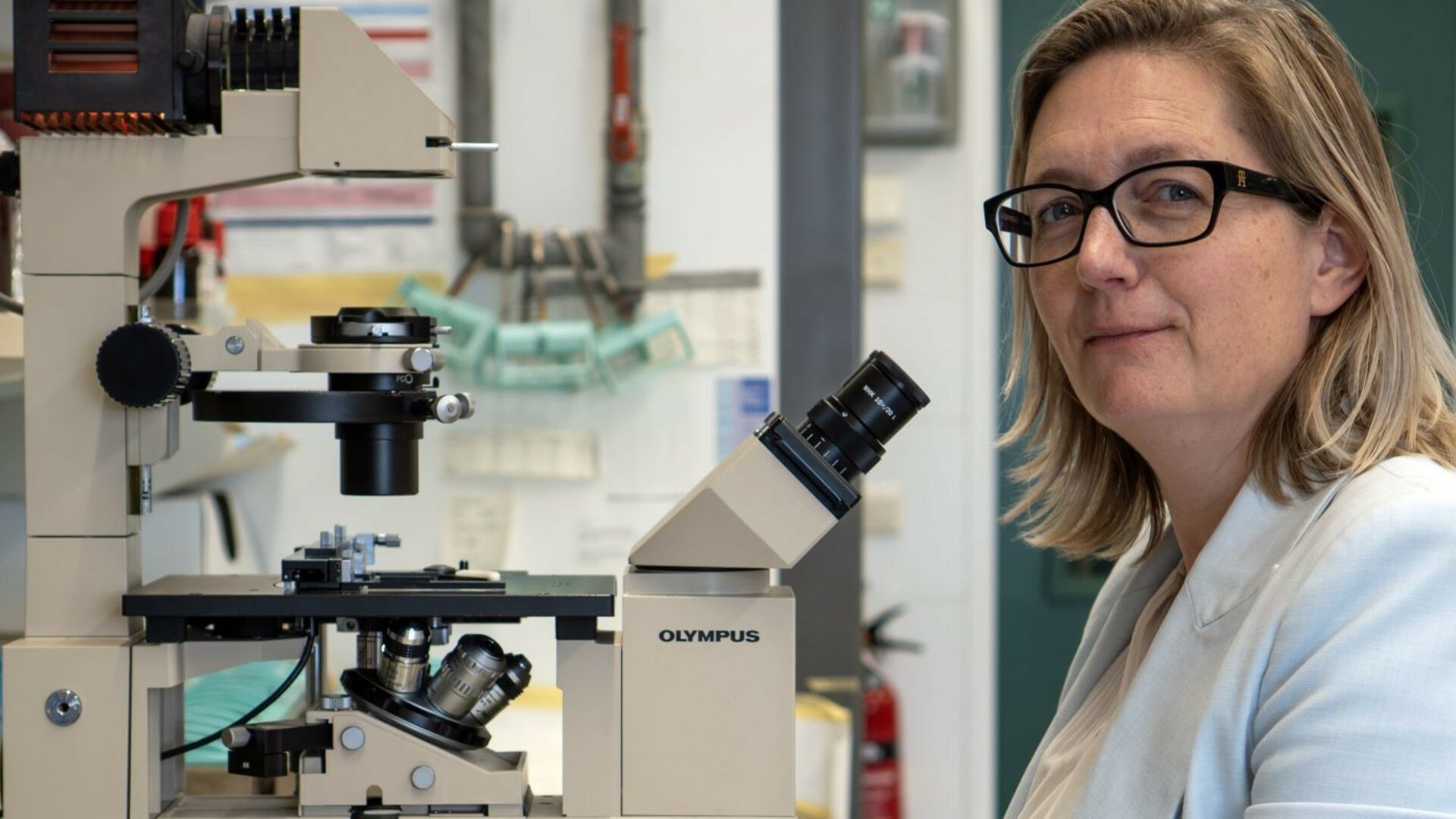
Researcher Ingrid van der Pluijm from the Departments of Molecular Genetics and Vascular Surgery wonders what happens to our blood vessels as we age. Two PhD theses from her research group demonstrate that DNA is a key driver of vascular ageing. ‘Ageing is the greatest risk factor for cardiovascular disease. It has long been known that a healthy lifestyle supports healthy blood vessels. But for a long time, the ageing process itself was underestimated in how profoundly it changes the blood vessels.’
This is how it works: Over the course of a lifetime, DNA constantly sustains damage. Normally, this damage is repaired, but as we grow older, that repair system becomes less effective. This also applies to vascular cells. When that damage cannot be properly repaired, it triggers a series of processes that accelerate blood vessel ageing and reduce their function.
Doctorates
Recently, two researchers from Van der Pluijm’s group received their doctorates. Janette van der Linden and Sanne Stefens both published articles in Aging Cell, respectively on vascular cells changing identity and on the positive effect of dietary restriction in reducing vascular ageing.
The scientists showed that DNA damage leads to several forms of vascular ageing. ‘Muscle cells in the vessel wall can change identity: they lose their normal function and take on characteristics of bone or inflammatory cells. They can also stop dividing, which contributes to the deterioration of the vessel wall.’
In addition, breaks in elastin occur, which normally keep the vessel wall smooth and elastic. These breaks make the vessel wall stiffer. ‘We also observe calcification, fat accumulation, and chronic inflammation of the vessel wall due to the inadequate clearing of DNA damage.’
All your organs
This combination makes blood vessels vulnerable and increases the risk of high blood pressure and aneurysms, Van der Pluijm explains. ‘If your heart and vessels aren’t doing well, it affects all your organs. Or, to quote the 17th‑century physician Thomas Sydenham: ‘Man is as old as his arteries.’’
‘There is hope,’ says Van der Pluijm. ‘The more we understand about how vascular ageing works, the more starting points we have for developing treatments.’
A different story
The researchers also showed, in various models but not yet in humans, that dietary restriction can slow and even partially reverse vascular ageing. This occurs through specific stress- and inflammatory-pathways in the cell, such as the cGAS‑STING pathway. ‘Dieting is already difficult, but dietary restriction is a different story. It means consuming only 70% of your required calorie intake. Not very realistic for most patients, but these insights do provide us with leads to develop new therapies.’
Van der Pluijm concludes with a clear message: ‘Our research shows that vascular ageing is not a passive consequence of the passage of time, but an active biological process that we can better understand and influence. That offers perspective for new ways to prevent cardiovascular disease, improve the health of older adults, and reduce the impact of ageing on our blood vessels.’