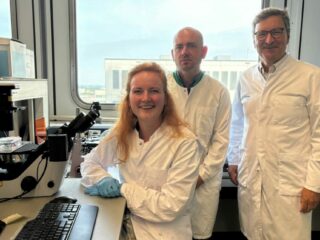
The company, named NeOncoFRAx, is a subsidiary of Erasmus MC. Its mission is to provide this immunotherapy, expected to be ready within a few years, to patients at a socially responsible price, says director Duko Drijfhout.
The new therapy is a personalized cancer vaccine. It contains synthetic protein fragments that are unique to the patient’s tumor. These fragments are presented to the patient’s immune system, enabling immune cells to detect and eliminate the tumor cells.
Because the vaccine is customized to each individual tumor, healthy cells stay unharmed, and the risk of side effects is low — unlike with chemotherapy or radiation. The personalized aspect of the vaccine also allows for better targeting of genetic differences among tumors — a major challenge in pancreatic cancer.
Hopeful Results
This therapy is already being administered at a clinic in Germany, where the results have been promising. The lives of pancreatic cancer patients appear to be significantly prolonged.
Clinical technologist Casper van Eijck Jr. — nephew of surgeon Prof. Casper van Eijck — leads the project team. He emphasizes one key point: ‘Right now, it is not yet a proven therapy, and there are no clinical studies available for patients to join. We are working thoroughly to develop them, but we are doing so gradually within carefully planned research programs.’
Frank
The founding of NeOncoFRAx was made possible in part thanks to a Dutch patient named Frank, who has since passed away from pancreatic cancer. Frank underwent the expensive immunotherapy treatment in Germany and wished for this therapy to become accessible to other patients. He and his family invested a significant amount of money to establish NeOncoFRAx.
With this funding, a collaboration of doctors and researchers at Erasmus MC will study the therapy and eventually produce it themselves.
Drijfhout emphasizes that NeOncoFRAx retains ownership of the knowledge gained. ‘NeOncoFRAx is explicitly not focused on profit maximization. Instead, we aim to maintain control over the product’s pricing through the knowledge and experience we acquire. This will ensure the therapy remains affordable and accessible to as many patients as possible’, he explains.
Laboratory
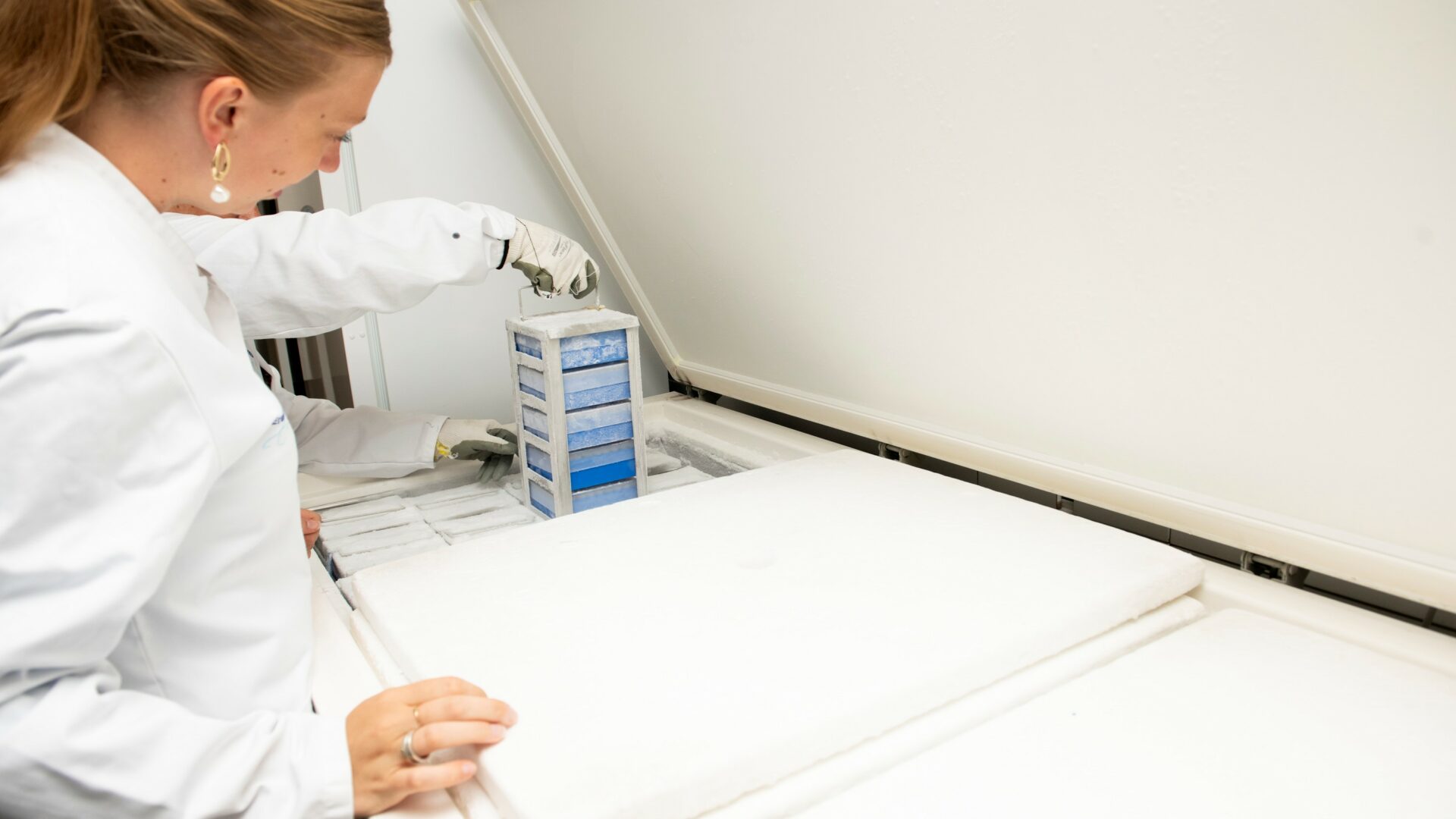
A specialized peptide laboratory has been set up at Erasmus MC Cancer Institute to develop the vaccine. Here, scientists investigate which proteins are tumor-specific and capable of activating the immune system. Once these proteins are identified, they are synthetically reproduced and incorporated into a vaccine.
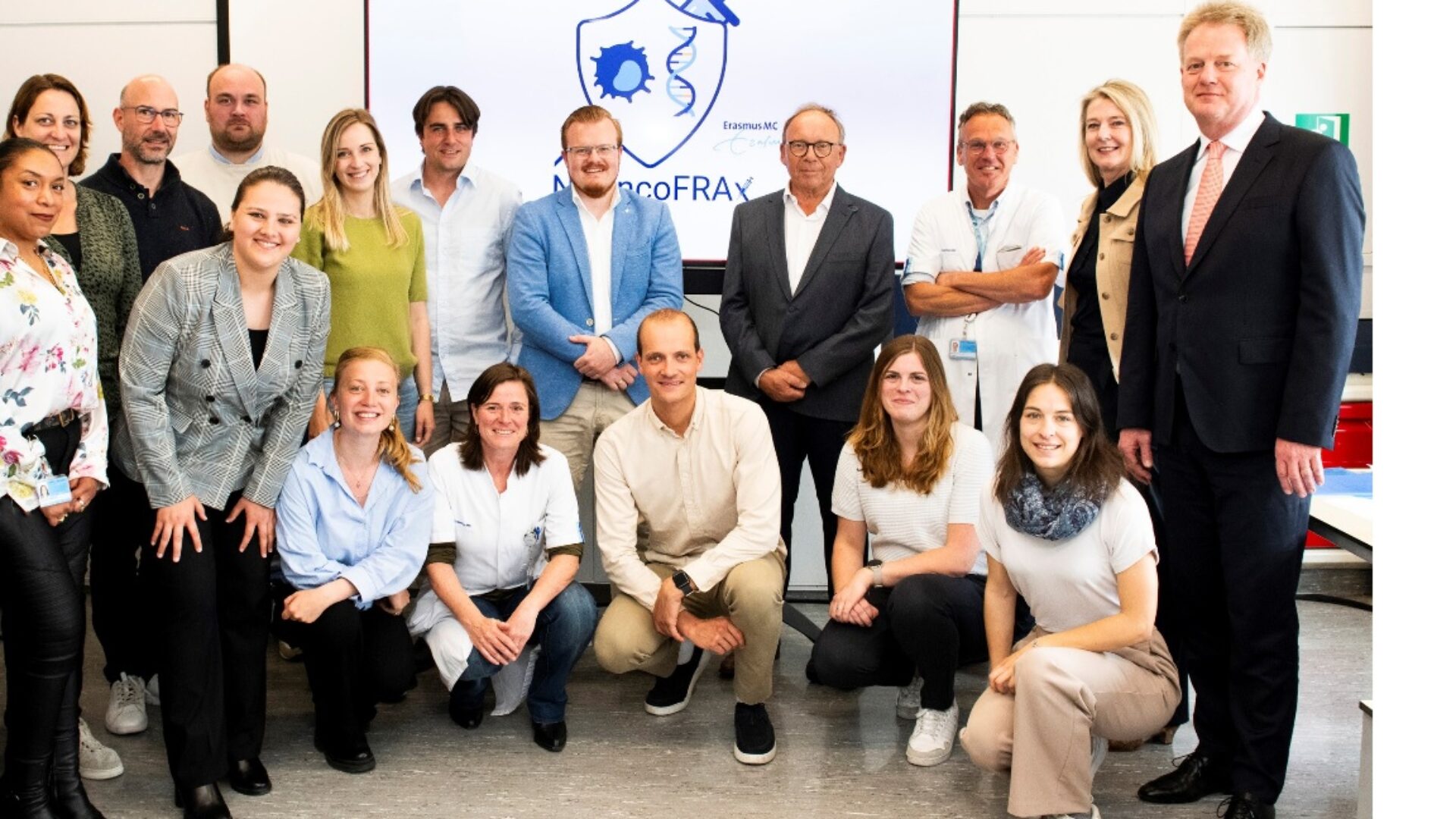
The NeOncoFRAx team
Only after this development phase is completed and the necessary approvals have been obtained will the vaccine be tested in a clinical trial led by prof. Joachim Aerts and dr. Nigel Kooreman. This study will initially focus on patients with pancreatic cancer. ‘But given the potential of the therapy, we also want to explore whether it could eventually be made available to patients with other solid tumors’, adds Van Eijck.
He emphasizes that this project is only possible thanks to intensive collaboration between multiple departments within Erasmus MC — including pulmonology, surgery, internal oncology, hematology, pathology, the hospital pharmacy, and bioinformatics.
Although Frank’s family has invested a considerable sum, developing the therapy is extremely costly. ‘We are therefore looking for investors — people willing to invest because they believe in the importance of developing this new therapy and who are willing to accept a socially responsible return,’ says Drijfhout.
For more information, visit the website, or email contact@neoncofrax.com