
Imaging modalities such as X-ray, ultrasound, CT, MRI, SPECT, and PET allow researchers to look inside the body without surgery. These technologies are vital for diagnosing and treating disease and for studying how molecules, cells, and organs function in their natural environment. By combining multiple imaging techniques—known as multimodal imaging—scientists can gain a richer, more detailed understanding of biological processes in both health and disease.
AMICE brings together all university medical centers in the Netherlands, along with Eindhoven University of Technology and Wageningen University. Under the leadership of Dr. Monique Bernsen, Director of the Core Facility Applied Molecular Imaging at Erasmus MC, the consortium will develop and share advanced preclinical imaging equipment and expertise nationwide.
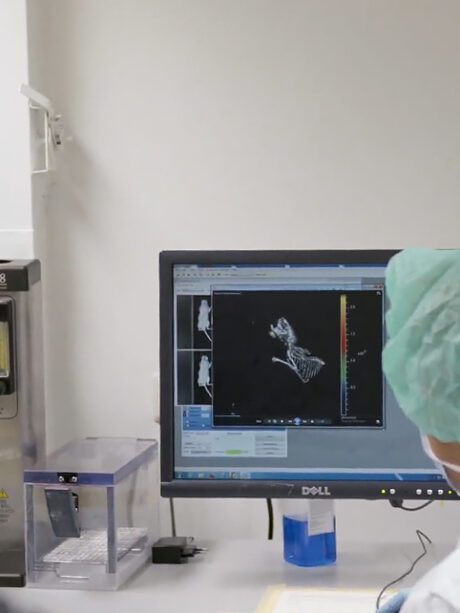
“This funding enables Dutch scientists to perform world-class research and maintain a leading international position,” says Dr. Bernsen. “We are uniting the preclinical in-vivo imaging facilities of all university medical centers into one national infrastructure.”
Beyond improving existing technologies, AMICE will also pioneer a new hybrid imaging platform that integrates ultrasound and MRI. This innovation will enable researchers to study disease processes in animal models with greater precision, paving the way for improved diagnoses and treatments.
“We are also harnessing artificial intelligence to extract more information from both new and existing datasets,” Bernsen explains. “This will lead to the development of a ‘virtual mouse and rat model’ for advanced data analysis, contributing to the reduction of animal use in research. In addition, we will enable integration with other cutting-edge technologies such as microscopy and spatial omics.”
Erasmus MC serves as the project coordinator and lead applicant for AMICE. The consortium partners include: Amsterdam UMC – Location AMC; Leiden University Medical Center; Radboud University Medical Center; Eindhoven University of Technology; University Medical Center Utrecht; Wageningen University; University Medical Center Groningen; and Maastricht University.
Website: www.amice-imaging.nl