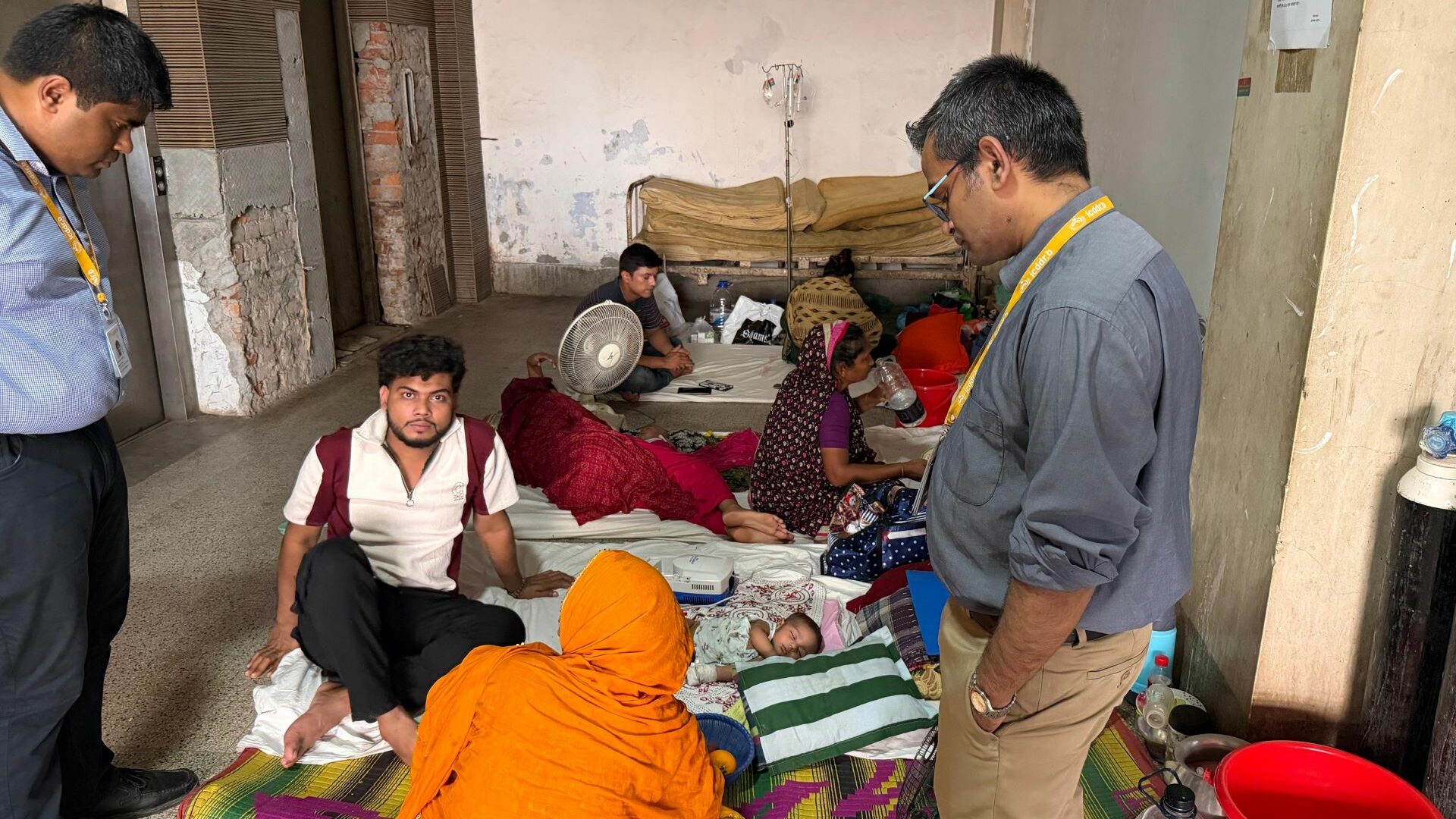
Hospitals in cities across Bangladesh are filled with children suffering from acute measles. Most of them are under two years of age. Erasmus MC’s Department of Viroscience has collaborated for many years with the research group led by Dr. Zhahirul Islam at the International Centre for Diarrhoeal Disease Research, Bangladesh (icddr,b) in Dhaka. Thanks to an emergency response grant from the Gates Foundation, researchers from Bangladesh and Erasmus MC were able to launch a joint research project on 1 July 2026.
As part of this study, clinical virologist Corine Geurts van Kessel, virologist Rory de Vries and their teams in Rotterdam are following one hundred young children who have been hospitalized with measles. Their goal is to better understand how the disease progresses and why so many children become critically ill.
‘Unfortunately, we are seeing firsthand what low vaccination coverage combined with high population density can lead to’, says De Vries. ‘The outbreak spread rapidly and has had devastating consequences for young children’, adds Geurts van Kessel.
‘Hospitals are doing everything they can, but they are unable to prevent children from dying of measles. By conducting research in Bangladesh now, we can study not only the acute course of the disease but also its long-term consequences. Our colleagues and the parents of the patients are highly committed to contributing to this research.’
Measles
Measles is a highly contagious viral disease. Common symptoms include fever, cough, a runny nose, conjunctivitis, and a characteristic red skin rash. Measles weakens the immune system, leaving children more vulnerable to other infectious diseases such as pneumonia, diarrhea, and middle ear infections. In severe cases, the virus can also infect the brain.
In recent years, Europe has seen a growing number of measles cases, largely because increasing numbers of parents are losing confidence in the safety and effectiveness of vaccination. People who have had measles or who have been vaccinated are generally protected for life.
According to local colleagues, Bangladesh’s planned 2024-2025 Expanded programme on immunization (EPI) and mass vaccination campaign was halted because of political unrest, despite the already low vaccination coverage. The virus is now circulating across the country’s 64 districts, with the capital, Dhaka, among the hardest-hit areas and experiencing widespread transmission.
‘Measles is a human virus, which means it can only spread from person to person’, explains De Vries. ‘There is therefore always some level of circulation. In theory, the virus could be eradicated by vaccinating the whole population. We also continue to see outbreaks in the Netherlands in areas with low vaccination coverage, such as the Bible Belt and parts of larger cities.’
Three years of follow-up
The researchers will follow one hundred children for up to three years after infection. Colleagues in Bangladesh are collecting throat swabs as well as blood and urine samples for the study. ‘We want to know how much virus is present at different stages of infection, how quickly antibodies develop, and how children recover’, says Geurts van Kessel. ‘We also want to understand why measles appears to cause much more severe disease in Bangladesh than it typically does in the Netherlands.’
For De Vries, the samples collected from the study participants represent a valuable opportunity to gain new insights into immunology. Measles is known to weaken immunological memory, at precisely the age when children are actively building immunity against many infections. ‘We want to understand how this process works and what its short- and long-term effects are.’
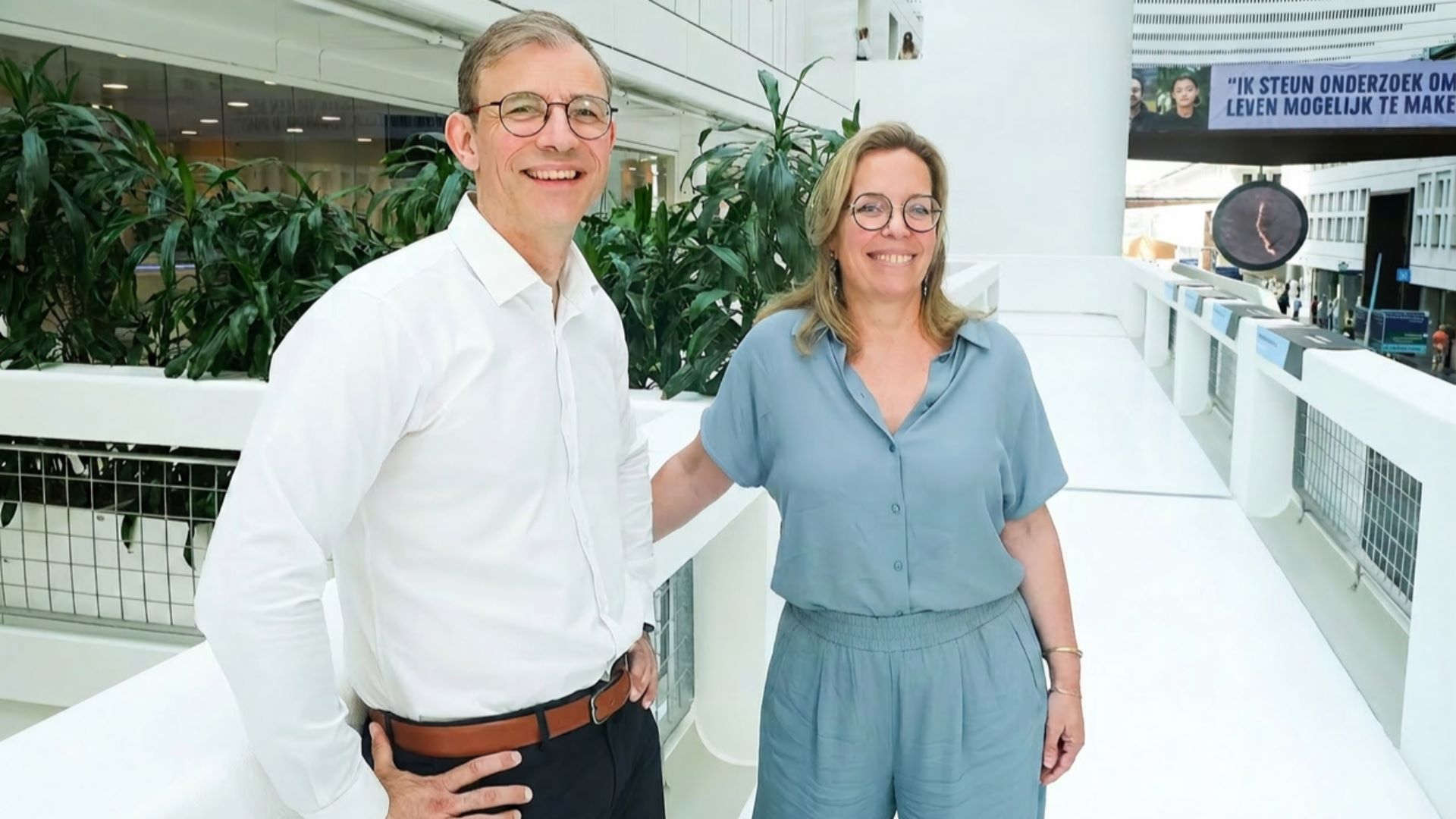
Rory de Vries and Corine Geurts van Kessel. Photographer: Esther Morren.
The outbreak also provides an opportunity to study Subacute Sclerosing Panencephalitis (SSPE), a rare but invariably fatal complication of measles in which the virus spreads to the central nervous system. The younger the children are when they contract measles, the greater their risk of developing SSPE. ‘That is why measles is certainly not ‘just a harmless childhood illness,’ as some people still believe’, says Geurts van Kessel. ‘At present, there is no treatment for SSPE.’
Vaccination coverage must increase
Although Bangladesh may seem far removed from daily life for many people in the Netherlands, the situation clearly demonstrates how quickly measles can spread when vaccination coverage falls, both virologists emphasize. ‘In the Netherlands, children receive their first measles vaccination at 14 months of age. Maternal antibodies generally protect infants until around six months of age. During the eight-month period between the loss of maternal protection and vaccination, children remain vulnerable to measles. Although rare, they can also develop SSPE if infected during this period.’
The Bangladeshi government has now launched a catch-up vaccination campaign on 5 April 2026 to protect young children and reduce the risk of future outbreaks. ‘This outbreak could have been prevented’, De Vries stresses. ‘Measles is incredibly contagious, but we have a highly effective vaccine. We simply need to use it. Here in the Netherlands as well.’
Health Threats
Our focus on early diagnostics, population screening, and population studies ensures that we can respond quickly to health threats caused by climate change, globalization, and lifestyle. We explore effective measures to prevent and mitigate health effects, as described in Strategy28, Erasmus MC’s strategic plan.