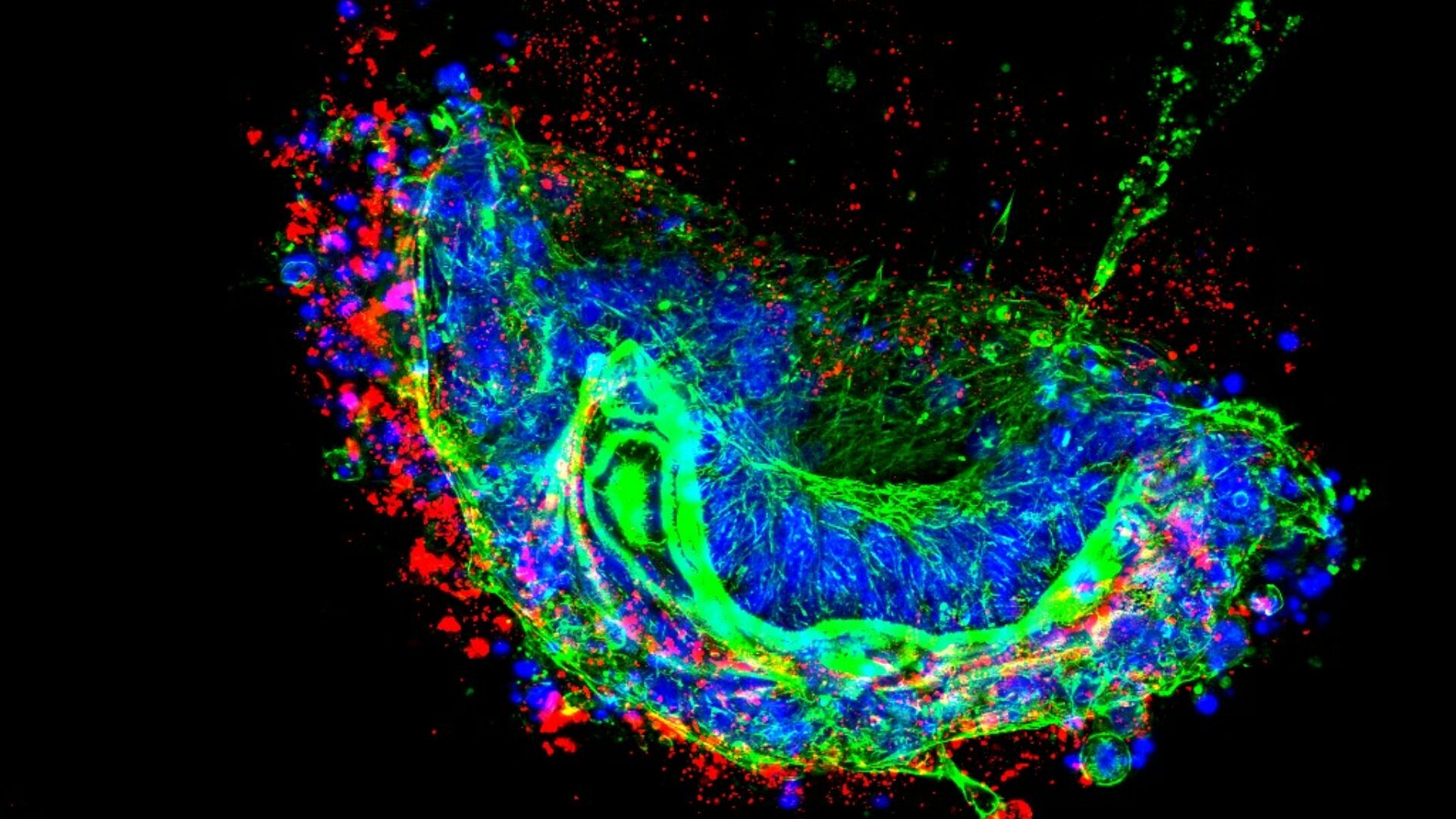
Every time a cell divides, its DNA must be copied accurately. This happens millions of times a day in our bodies, usually without errors. But during this process, the DNA is temporarily ‘unzipped’, making it vulnerable. Molecular geneticist Nitika Taneja and her team have now discovered a new way in which the cell protects newly copied DNA during this vulnerable phase: it folds into specialized protective loop structures. They published the results in Nature.
‘DNA is often depicted as a long strand. In reality, it is intricately folded into loops inside the cell nucleus. We discovered that these loops can actively contribute to protecting newly copied DNA, especially when the copying process is under stress.’
Tumor cells
The researchers also found that these protective mechanisms may be relevant in cancer cells. Chemotherapy often works by creating stress during DNA replication, and cancer cells can also exploit this mechanism to better protect their newly copied DNA – but against chemotherapy, which is intended to destroy them.
‘This is the kind of fundamental knowledge that helps us understand how cells deal with stress during DNA copying. It may eventually help explain why some cancer cells tolerate chemotherapy better than others. It opens up new perspectives, but it will take time before this knowledge can be applied in the clinic’, says Taneja.
Safe little space
On the windowsill of Taneja’s office stands a framed photo of her seven-year-old son. This is how she would explain her recent Nature publication to him: ‘When DNA copies itself, it’s very important that the copy is correct. If mistakes happen, the cell can be damaged, stop working properly or in some cases start dividing uncontrollably. So how does the cell protect DNA while it is being copied? It folds the DNA into a loop – almost like making a safe little space around it- and then this newly copied DNA is extra protected.’
Copying DNA, known as replication, is an essential but fragile process. The double helix is opened so that the genetic code can be duplicated. This happens when a cell divides and needs to pass on its DNA to daughter cells.
Delicate phase
‘This is a very delicate phase for DNA’, Taneja explains. ‘Because the DNA is open and actively being copied, it can not only be attacked by external factors, such as chemotherapy, but also by proteins and enzymes within the cell itself. Replication can also slow down, for example due to DNA damage or a shortage of building blocks.’ It is precisely at these moments that the risk of errors in newly copied DNA increases.
Under these stress conditions, cells reorganize their DNA, the researchers discovered. Around sites where copying slows down or stalls, newly copied DNA becomes stabilized within specific chromatin loops. ‘The loop then forms a protective environment around the vulnerable DNA,’ says Taneja.
‘In reality, DNA is intricately folded into loops inside the cell nucleus’
This protection is controlled by two key proteins: CTCF, which helps organize the 3D structure, and G9a, which adds a specific molecular mark (H3K9me3). Together, they make the chromatin loop more compact and less accessible. The protection only works inside the loop; outside it, the researchers observed increased DNA damage.
The discovery changes how scientists think about DNA protection. ‘What surprised me most is that the shape itself, the 3D organization of our DNA, plays an active role in protecting newly copied DNA,’ says Taneja.
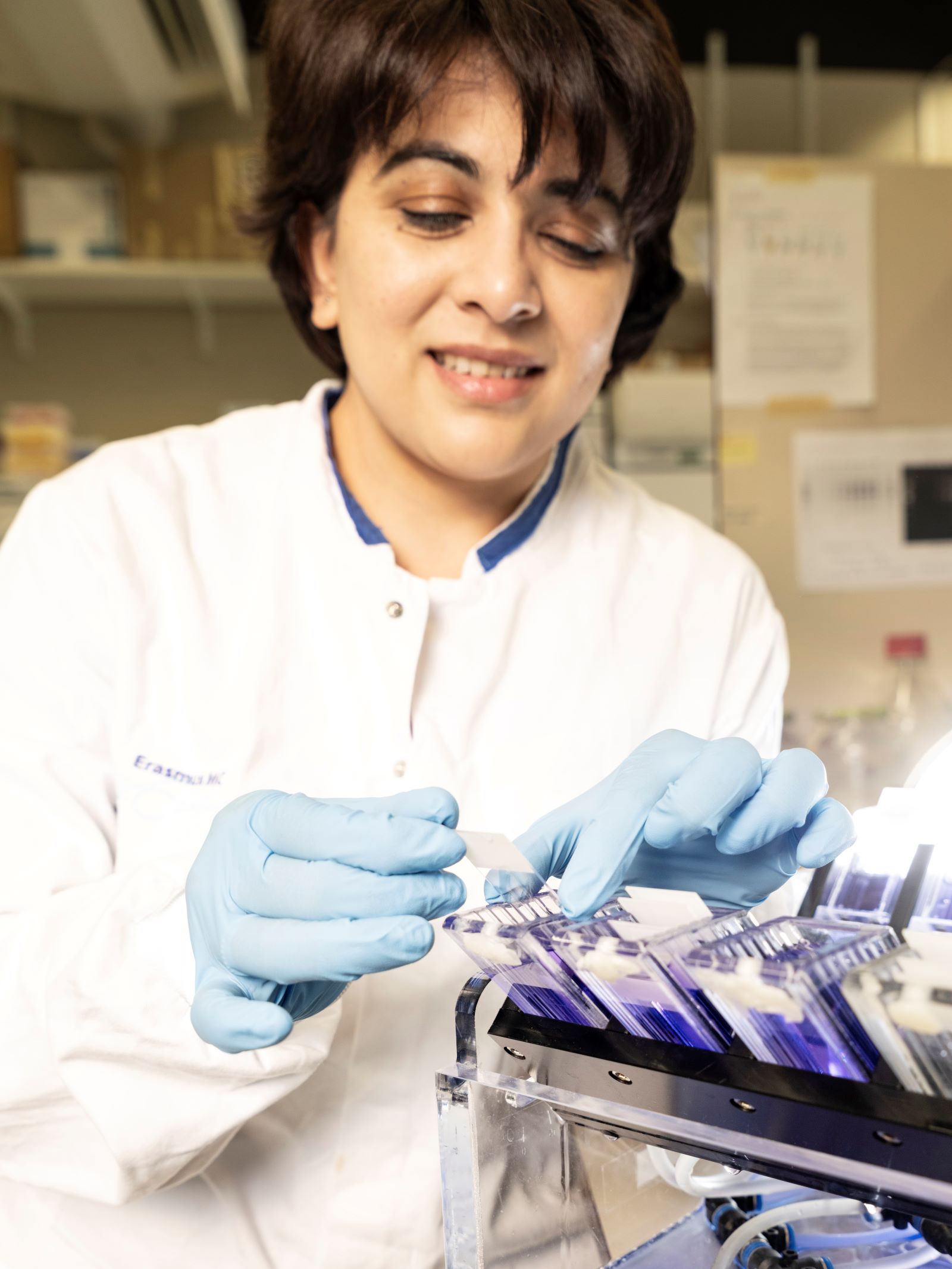
Nitika and the ChromStretch, photo by Harmen de Jong
Valorisation
This research was made possible by the techniques Taneja and her team developed. One of those is the ChromStretch. Read more: Nitika investigates why some cancer cells are resistant to chemotherapy.